WhatsApp automation
WhatsApp Business API Pricing in India: Every Rate, Free Tier and Worked Monthly Bill (November 2026)
Meta charges per delivered message, and the rules changed again on 1 October 2026. Here are the official India rates, what is still free, and three real-world monthly bills you can copy.
By Shreyas Raj, founder of RapidXAI · Updated 29 November 2026 · 6 sources
The short answer
As of November 2026, Meta charges Indian businesses per delivered message: Rs 0.8631 for a marketing template, Rs 0.115 for a utility template, Rs 0.115 for an authentication (OTP) template and Rs 0.115 for a service reply, on the rate card effective 1 October 2026. The first 1,000 service messages per phone number each month are free, and every message is free for up to 7 days after a customer reaches you from a Click to WhatsApp ad. Your BSP may add a markup or platform fee on top.
Meta's India rate card, effective 1 October 2026
These are Meta's own list rates for messages delivered to Indian (+91) numbers, from the INR and USD rate cards effective 1 October 2026 [1].
| Category | What it is for | INR per message | USD per message |
|---|---|---|---|
| Marketing | Offers, launches, cart reminders, re-engagement | Rs 0.8631 | $0.0118 |
| Utility | Order updates, reminders, receipts | Rs 0.115 | $0.0014 |
| Authentication | OTPs and login codes | Rs 0.115 | $0.0014 |
| Authentication-international | OTPs at Meta's higher international rate (eligibility rules apply) | Rs 2.4971 | $0.0304 |
| Service | Free-form replies inside an open 24-hour chat | Rs 0.115 | $0.0014 |
| Meta Business Agent | Replies written by Meta's own AI agent | $2.00 per 1M tokens | about 4 to 5 cents per message |
Two things jump out. Marketing costs about 7.5 times a utility message. And service replies are no longer free past the first 1,000 (more on that shock below).
Meta only charges for messages that are actually delivered [1]. A template to a number not on WhatsApp costs nothing.
How we got here: a short, slightly chaotic timeline
If a blog post or a BSP salesperson quotes you 'conversation pricing' or says 'service messages are free', they are working from an old rate card. Here is the sequence, straight from Meta's pricing documentation [1].
| Date | Change |
|---|---|
| 1 Nov 2024 | Service messages become free |
| 1 Jul 2025 | Per-message pricing replaces 24-hour conversation pricing |
| 1 Jan 2026 | India marketing rate goes up; INR billing launches for India-based businesses and partners |
| 1 Apr 2026 | India authentication-international rate goes up |
| 1 Jul 2026 | Meta Business Agent introduced, billed per token |
| 1 Oct 2026 | Service messages and utility messages sent in reply to users are charged again; 1,000 free service messages per number per month |
Meta's own words on the October change: it 'resumed charging, on a per-message basis, for messages that were previously free' [1]. That includes utility messages sent inside an open customer service window, which had been free under the 2025 rules.
Moral: re-check your rate card every quarter (Meta certainly re-checks it).
What is still free
Free is rarer now, but three doors are open.
1. The free entry point window
When someone messages you from a Click to WhatsApp ad on Android or iOS and you reply within the customer service window, a free entry point window opens. It can stay open for up to 7 days, and marketing, utility, authentication and service messages are all free inside it [1].
That makes Click to WhatsApp ads quietly powerful: the ad costs money, but the follow-up conversation for a week does not.
2. The first 1,000 service messages
Each business phone number gets 1,000 delivered service messages free per month. Unused ones do not roll over [1].
Watch this one: if you have no payment method on file, Meta stops delivering service messages after the free 1,000 [1]. Your bot goes silent mid-month (not a fun support ticket to raise mid-campaign).
3. Messages typed in the Business app on a coexistence number
If you connect your existing WhatsApp Business app number to the API through coexistence, replies you send by hand from the app stay free. Only API-sent messages are billed [4].
Volume discounts: only for utility and authentication
Marketing has no volume discount. Utility and authentication do, counted per month across your whole business portfolio [1].
| Monthly utility volume | Utility rate | Monthly authentication volume | Auth rate | Discount |
|---|---|---|---|---|
| Up to 2.5 crore | Rs 0.115 | Up to 7.5 lakh | Rs 0.115 | List rate |
| 2.5 to 5 crore | Rs 0.1081 | 7.5 lakh to 1.5 crore | Rs 0.1081 | 6% |
| 5 to 10 crore | Rs 0.1012 | 1.5 to 2 crore | Rs 0.1012 | 12% |
| 10 to 20 crore | Rs 0.0943 | 2 to 5 crore | Rs 0.0943 | 18% |
| 20 to 30 crore | Rs 0.0874 | 5 to 10 crore | Rs 0.0874 | 24% |
| Above 30 crore | Rs 0.0805 | Above 10 crore | Rs 0.0805 | 30% |
Source: Meta's INR volume tier card effective 1 October 2026 [1]. If you send fewer than 2.5 crore utility messages a month (that is most of us), you pay list rate. Messages sent free in an entry point window do not count toward tiers [1].
Messaging customers abroad costs more
The rate depends on the recipient's country code, not yours. Indian exporters, travel agents and developers selling to NRIs, take note.
| Recipient market | Marketing (INR) | Utility (INR) | Service (INR) |
|---|---|---|---|
| India | Rs 0.8631 | Rs 0.115 | Rs 0.115 |
| United Arab Emirates | Rs 4.2114 | Rs 1.1509 | Rs 1.1509 |
| Saudi Arabia | Rs 4.2114 | Rs 0.7834 | Rs 0.7834 |
| United Kingdom | Rs 4.6496 | Rs 1.6122 | Rs 1.6122 |
| North America | Rs 1.8313 | Rs 0.2491 | Rs 0.2491 |
From Meta's INR rate card effective 1 October 2026 [1]. A marketing message to Dubai costs almost five times one to Delhi (Gulf NRIs are expensive to reach, it turns out).
Three worked monthly bills
These are illustrative examples. Every volume below is an assumption, not client data, so swap in your own. Rates are Meta's India list rates as of November 2026 [1]. BSP fees not included.
Assumed example: a clinic with one number
| Line | Volume | Rate | Cost |
|---|---|---|---|
| Appointment reminders (utility) | 1,200 | Rs 0.115 | Rs 138 |
| Health camp announcement (marketing) | 300 | Rs 0.8631 | Rs 259 |
| Patient replies (service) | 2,500, first 1,000 free | Rs 0.115 | Rs 173 |
| Total | about Rs 570 |
Meta's share is trivial here. The real cost for a clinic is the software and setup around it.
Assumed example: a D2C brand doing 10,000 orders a month
| Line | Volume | Rate | Cost |
|---|---|---|---|
| Campaigns and cart nudges (marketing) | 50,000 | Rs 0.8631 | Rs 43,155 |
| Order, shipping, delivery updates (utility) | 40,000 | Rs 0.115 | Rs 4,600 |
| Checkout OTPs (authentication) | 3,000 | Rs 0.115 | Rs 345 |
| Support replies (service) | 6,000, first 1,000 free | Rs 0.115 | Rs 575 |
| Total | Rs 48,675 |
Marketing is 89% of the bill. If, say, 10,000 of those marketing messages go to people who came in through Click to WhatsApp ads within their 7-day free window, you save Rs 8,631. That is the cheapest optimisation on this page.
Assumed example: a Pune developer messaging Gulf NRIs
5,000 project launch messages to UAE numbers: 5,000 x Rs 4.2114 = Rs 21,057. The same campaign to Indian numbers: Rs 4,316.
If the NRI list is large, test a utility-style follow-up for people who already enquired (site-visit confirmations are utility, a launch offer is not).
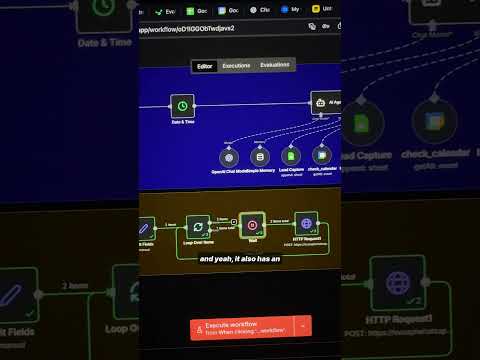 This AI WhatsApp Agent Sells for $249/month · Shreyas Raj on YouTube
One workflow that sends booking reminders and promotional offers: a reminder bills as utility, the offer bills as marketing, at very different rates.
AI replies: Meta's agent or your own?
Since 1 July 2026 Meta offers its own Meta Business Agent. It is billed at $2.00 per million tokens, which Meta estimates at about 4 to 5 US cents per message, and volume tiers and free messages do not apply [1].
Compare that with running your own AI agent through the API. Each reply is a service message at Rs 0.115 (and the first 1,000 a month are free), plus whatever your model costs per reply.
Our take: at Indian rates, a well-built custom agent on a mid-size model can cost less per reply than Meta's agent, depending on the model and prompt size, and lets you choose the model, the data and the handoff rules. Meta's agent wins on setup speed. Price both with your real volume. Our AI agent vs chatbot guide covers the build side.
WhatsApp calls are priced separately
Customers calling you on WhatsApp is free [2]. Business-initiated calls to Indian numbers cost Rs 0.3885 per minute for the first 50,000 minutes a month, billed in six-second pulses, with tiers dropping to Rs 0.0586 above 50 lakh minutes [2].
Asking permission to call is a message, billed at messaging rates [2]. Full details in our WhatsApp Calling API guide.
Billing in rupees: a deadline to diarise
Meta launched INR billing on 1 January 2026 for India-based solution providers and directly integrated businesses [1].
Eligible businesses must migrate every Messaging account in their portfolio to INR by 31 December 2026, and Meta stops delivering non-INR messages from 1 January 2027 [1]. If you still pay Meta in USD on a direct integration, fix it this month.
Five ways to cut the bill
- Categorise honestly. Order and appointment messages are utility at Rs 0.115. Category decides price, and every template must carry one [5]. A discount line inside an 'order update' makes it a marketing message in all but name.
- Send fewer, better marketing messages. Segment by last purchase. A blast to everyone costs Rs 0.8631 a head and hurts your quality rating, which also decides how fast your messaging limit grows [3].
- Use Click to WhatsApp ads for acquisition. The 7-day free window covers the whole follow-up.
- Keep chats in the window. Reply fast so conversations stay inside the 24-hour window, where you can send free-form messages instead of templates [6].
- Read your BSP invoice line by line. Compare its per-message price with Meta's rate card. The difference is the markup.
Questions people ask
What is the WhatsApp API price per message in India?
As of November 2026, Meta's India list rates are Rs 0.8631 per marketing message and Rs 0.115 per utility, authentication or service message, from the rate card effective 1 October 2026. BSPs may charge a markup or platform fee on top.
Are service messages still free?
Not fully. Since 1 October 2026 each phone number gets 1,000 free service messages per month, after which they cost Rs 0.115 each in India.
Are utility messages free inside the 24-hour window?
Not any more. From 1 October 2026 Meta charges utility messages sent in reply to users inside an open customer service window. Only the free entry point window from Click to WhatsApp ads keeps them free.
Does WhatsApp charge for undelivered messages?
No. Meta charges only for messages that are delivered.
Does Meta give volume discounts in India?
Only for utility and authentication messages. Utility discounts start above 2.5 crore messages a month and authentication above 7.5 lakh, rising from 6% to 30%. Marketing has no volume discount.
Why is my BSP charging more than Meta's rate?
BSPs add their own margin, a monthly platform fee, or both. Ask for Meta's charge and their fee as separate lines so you can compare providers.
Do I have to pay Meta in rupees?
Eligible India-based businesses and partners billed directly by Meta must migrate to INR by 31 December 2026. Meta stops delivering non-INR messages for them from 1 January 2027.
Keep reading
Sources
- [1] Pricing on the WhatsApp Business Platform, with INR and USD rate cards and volume tiers effective 1 October 2026, Meta for Developers, 2026
- [2] Business Calling API pricing and INR calling rate card, Meta for Developers, 2026
- [3] Messaging limits, Meta for Developers, 2026
- [4] Onboarding WhatsApp Business app users (coexistence), Meta for Developers, 2026
- [5] Message templates, Meta for Developers, 2026
- [6] Send messages (customer service windows), Meta for Developers, 2026
Shreyas Raj founded RapidXAI in Pune and builds AI voice agents, automation and AI search work for clients. He teaches the same stack in public on his YouTube channel (356 videos and 41.6K subscribers as of November 2026) and through EducateX AI.